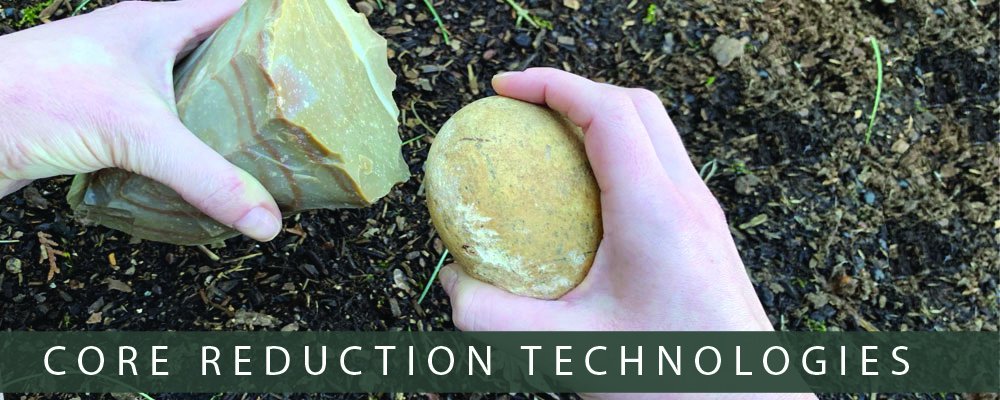
Cores represent initial reduction of toolstone in most flaked stone technologies. Cores exhibit wide variation in reduction techniques or culturally determined methods of manufacture, maintenance, reworking, and recycling. This variation in behavior is reflected in diagnostic technological attributes of the cores and in the flakes removed from the cores. Workshop participants will develop skills in recognizing core reduction technologies including unidirectional, multi-directional, bipolar, blade, and biface. Instruction focuses on analysis of stages of reduction and the tools used in the reduction of cores.
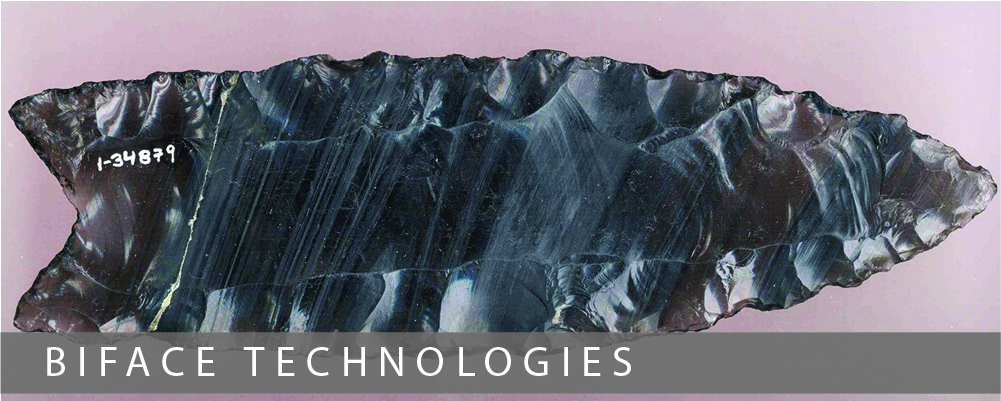
Biface technologies are common, widespread, and highly varied. Each biface technology represents a culturally-determined set of methods for the manufacture and maintenance of stone tools. Workshop participants will develop skills in producing and recognizing percussion and pressure biface reduction technologies. In addition, stages of reduction, as well as the tools used in the production of bifaces will be studied. The workshop will also teach identification of characteristic manufacture and use break types, and archaeological applications of technological analysis, including how to select items for obsidian hydration analysis and protein residue analysis.

Flake tools are simple in form and manufacture, yet can be extremely efficient tools as they are easily made and extremely sharp. Identification and analysis of flake tools offers insight into site activities that might otherwise be overlooked. Participants will develop skills in recognizing different percussion reduction methods for producing expedient flake tools, as well as specialized flake tool technologies: radial breaks, burins, and scrapers.
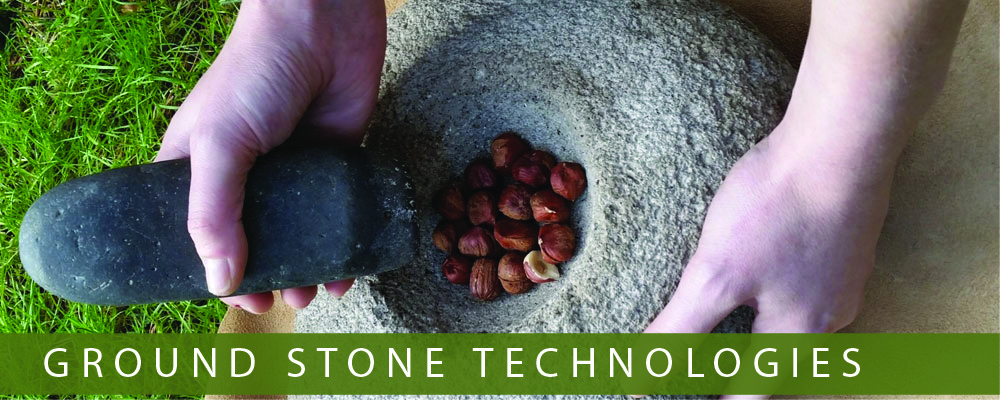
Ground stone tools represent diverse activities, including technological, subsistence, social, and symbolic aspects of communities. Conducting detailed analyses of ground stone assemblages informs on regional Indigenous raw material knowledge, resource use, and tool manufacturing and maintenance practices. Applying experimental archaeology to ground stone technology analysis offers a means to explore variables in tool manufacture and use through raw material selection, reduction strategies, and use wear.

Technological lithic analysis involves examining the life cycle of stone tools beginning with raw material procurement through tool manufacture, use, maintenance, recycling, and disposal. Experimental flintknapping and stone tool use have shown that these processes leave diagnostic attributes that can be used to identify specific lithic reduction strategies. Unlike other lithic analysis methods, this approach can reveal a wealth of behavioral information by identifying the decisions people made in the past while making stone tools.